[mc4wp_form id="1782"]

From Panels to Presents: The Comics History Book Gift Guide

The 2025 edition of something I’ve tried writing before, but never seemed to finish before February, so … we’ll try again. As gift-giving season approaches, I’m starting to be pestered by my loved ones about my Christmas wishlist. As I put a few ideas together, my list is pretty much the same every year: books, books, books, and expensive woolly socks. There have been so many amazing books that have come out or come to my attention this year. Here are the ones I’d recommend to anyone, especially to people who enjoy comics history.

The Art of Popeye by R. C. Harvey

Another Popeye fan and a friend got this at San Diego Comic Con this summer, and I had to borrow it immediately. It’s filled with great art from the entire world of Popeye, not only the E. C. Segar strip but also classic animation and more. If you’re already a Popeye fan or at least a Popeye appreciator, you’ll enjoy this. I don’t know whether R. C. Harvey left more finished manuscripts, but this could well be one of the last books we’ll get from one of the great comics historians.

How Comics Are Made by Glenn Fleishman

I’ve praised this book many times, and I won’t be stopping anytime soon. Yes, I was interviewed for it, and facilitated a couple of small bits of this massive and enlightening puzzle. It’s a monumental work. This time, I don’t mean the book’s overall size, but the place it holds in our understanding of comics history. The invention of newspaper comics, and how they were actually created and put into readers’ hands, is an extremely understudied element of the story, and one that is already hard to nail down with the passing of the people involved and the binning of the technology used. Glenn was perfectly positioned not only to make sense of it but also to gather these disparate elements to tell the story. There’s more work to do, but anyone who works on this subject in the future will owe a debt of gratitude to Glenn Fleishman.

Mafalda by Quino, translated by Frank Wynne

A fresh English translation of this Argentinian kid strip classic. Often compared to Schulz’s Peanuts, I think it shares stronger DNA with Ernie Bushmiller’s Nancy, but that’s me. Yes, it’s very political, but seeing the questions and observations of another place and time mirror so much of our own is a comfort, granting a nod of comforting recognition. If Mafalda can weather the storm, so can I. From what I understand, this is going to be the first of a multivolume series, so start collecting them now, or you’ll have to hunt them all down later.

History of Manga by Eike Exener

Eike Exener’s previous book, Comics and the Origins of Manga: A Revisionist History, was excellent and mind-opening for me. If you’re interested in the world of comics, its global reach and evolution, and want a de-mystified understanding of manga in particular and how this rich branch of the comics family tree fits into the larger picture, get this book. I have a lot to learn about manga in general, and Exener’s books have been enlightening, making me finally feel like I’m on the right track.

Moomin Comic Strip Collections

The Moomin comic strip collections are not new, nor did they just come to my attention this year, but I must evangelize for this hilarious and wonderfully drawn strip every chance I get. More people need to know about it, especially American comic strip fans. Tove Jansson’s Moominvalley is a place I love to visit, where ridiculous adventures launch on preposterous whims, outlandish weirdos pop in and out of the story with even more frequency than real life. With the help of her brother Lars, she created a comic strip that should be more widely known. The Complete Moomin Comic Strip collections by Drawn & Quarterly are my preferred method to collect and read this strip (in ten volumes), but there are smaller paperback collections of single storylines that have been colored and are perfect for younger readers or anyone just wanting to give it a little try. For the holidays, let me recommend Moomin Winter, for when you just need a moment away from the crowd.

The Smythes by Rea Irvin

A book that is on my own Christmas wishlist! It comes out on December 9, and I’ve not seen it yet, but from what I’ve seen of The Smythes by Rea Irvin, it looks like a ton of fun and incredibly beautiful. I’ve always been an easy touch for anything related to the early days of the New Yorker magazine. I’ve read multiple biographies and memoirs of the early writers and editors there, including some of my all-time favorites like E. B. White and James Thurber. Rea Irvin is perhaps most famous as the creator of the New Yorker’s monocle-wearing classic logo/mascot/colophon character, Eustice Tilley.

Society is Nix by Peter Maresca

This new edition has some new content from the long out-of-print earlier edition of this monumental tome. And, I don’t use the term monumental lightly. This is not only a fascinating work of comics history, it is also lovingly and gorgeously reproduces pioneering comics pages in absolutely massive reprints. The book is nearly the size of a modern newspaper sheet, so it’s still a bit smaller than these gorgeous comics were originally printed, but far larger than we typically get. Here we also have strips we never get to see by artists who would define comics as we know them today, but who did so before anything in comics was truly codified. “Gleeful anarchy,” indeed. Wild formatting, shocking color, and action that cartoonists today cannot seem to imagine.

Tell Me A Story Where the Bad Girl Wins: The Life and Art of Barbara Shermund by Caitlin McGurk

Easily the greatest title of any book, maybe ever. Another book from the past year or so, from the early days of the New Yorker, but also incredibly charming, fun, sassy humor, and gorgeous drawings. I’m a huge fan of this book, and now of Barbara Shermund. This book has easily been the most passed-around book in my circle of comic nerds and professionals this year. This book won the Eisner Award for Best Comics-Related Book this year.

The Art of Nothing: 25 Years of Mutts by Patrick McDonnell

This book has been out for a few years now, but in case you haven’t seen it, it includes Patrick’s gorgeous drawings and all the fun and humor of one of the greatest comic strips currently running, Mutts. So far, it’s the closest thing we’ve got to an artist edition of Mutts. And how many books have contributions from both Eckhart Tolle and Lynda Barry? I imagine that’s a short list.

The Poet, Volume Two: 2021, by Todd Webb

If you love Mutts by Patrick McDonnell (who wrote a foreword for this volume), Peanuts by Charles M. Schulz, the work of Mo Willems, and thought “This could use a dash of Gary Larson’s Far Side,” well, look no further. This daily strip, which Webb publishes online, has (thankfully) come out in a second annual compendium. He’s published his comic in little affordable collections, too, but these are great for passing around to friends who’ll enjoy it. These big annual collections (there’s a Volume One, as well) are fabulous, and I keep them for myself.

The Essential Peanuts by Charles M. Schulz: The Greatest Comic Strip of All Time by Mark Evanier

2025 marks the 75th anniversary for Peanuts. Yes, this book includes an essay by me, and I was on the committee that picked (and argued over) which strips to include in this very special book. This includes history, personal reflections, and so much more. It’s a very special collection. This special edition also includes a collection of stickers, mini posters, a patch, and more, all designed by Chip Kidd!

I’m sure there are books I’ve accidentally overlooked, but for now, this is a pretty good lineup. I’d be thrilled to receive any one of these books as a gift, so I imagine the comics history nerd in your life will too (if they don’t already have it). If you’re the comic nerd, forward this to your friends and family with a note about favorites. All of the affiliate links in this post support local, independent bookshops.

While you’re here, subscribe to my FREE quarterly newsletter.

← Back

Thank you for your response. ✨

About the Author: Benjamin L. Clark writes and works as a museum curator.

The Best Bookends for Heavy Art Books

We have a lot of books. Not as many as we’ve had at other times in life when we enjoyed “midwestern” quantities of residential space, but even in California’s Wine Country, we have a lot of books. Before moving from my native Nebraska to Texas for grad school, I unloaded hundreds of books, mainly at Bluestem Books in Lincoln, Nebraska. Life in Texas, Oklahoma, Montana, and back to Nebraska saw the number of books fluctuate by the hundreds again and again. Then, an immediate turn left to California saw us unloading hundreds and hundreds of books, mainly at Jackson Street booksellers in Omaha.

A large black bookend stands at the end of a row of large books. Visible is a collection of cartoons from the magazine The New Yorker.

Today, we have hundreds of books at home. Most books are easy to shelve, but I’ve struggled with heavy, large-format art books. I’m a comic art museum curator, so I especially have a weakness for giant artist-edition books. Stacked on their side, largest to smallest, is okay, but it can make those most oversized books on the bottom hard to grab. Also, the weight of the smaller books, especially if they’re much smaller, can cause the front cover of the bottom book to distort over time. The best solution is to store them standing upright. But, if they fall, their weight can damage books that were expensive to begin with and perhaps impossible to replace. I’ve had page blocks rip away from spines, cracked hinges, you name it. I’ve come to rely on these affordable, heavy-duty bookends to keep my biggest books on the shelf, where they belong. They’ve never let me down, even with the modest seismic activity we’ve seen. So, if you’ve been needing good bookends and trying to get by with the cheap little ones, don’t do that. These are money well-spent. Your books will be happier and safer with these sturdy bookends.

I was named an expert in an ApartmentGuide article. Check out the featured article How to
Create a Cozy DIY Reading Nook in Your Home
| ApartmentGuide (a Redfin subsidiary)

This post includes Amazon referral links.

About the Author: Benjamin L. Clark writes and works as a museum curator.

I have a new book out! The Art and Life of Charles M. Schulz in 100 Objects

It’s hard to believe, but I had a book come out on November 1st! You can get it anywhere good books are sold, but if you buy it from the Charles M. Schulz Museum, it will be signed by none other than Jean Schulz!

Working with Jeannie on the book was a very special experience. I get to work with her quite a bit developing exhibitions for the Schulz Museum in Santa Rosa, California, and for Snoopy Museum Tokyo, and she’s always happy to pitch in with research — connecting me to contacts, making ID’s in photos, and sharing memories. But this was different. We got to reflect on Sparky as an entire person together and dig into various parts of his life and personality we’ve not done a lot about at the museum for whatever reasons.

The book is almost like a visit to the Schulz Museum — 100 Objects from the museum’s collections are featured in gorgeous detailed photos, and a bit of history is shared about each, often with other supporting images of other objects that help tell the story. We also asked 50 contributors, from cartoonists, celebrities, politicians, friends, and members of the Schulz family, to share their own stories and remembrances related to these objects.

Interior spread from 100 Objects

All of us are very proud of the book, and I hope you will like it, too. It’s out just in time for the holiday gift-giving season, so if you know someone who loves Peanuts (and who doesn’t?), this is something a little different and totally new they will love. If you do buy a copy, be sure to rate and review it wherever you bought it, as it helps other fans find the book. Thank you!

← Back

Thank you for your response. ✨

About the Author: Benjamin L. Clark writes and works as a museum curator.

Book Review: Dames Fight Harder by M. Ruth Myers

Dames Fight Harder

In this sixth installment of Maggie Sullivan mysteries, Maggie‘s friend Rachel Minsky is accused of killing a man that “had it coming.” Rachel is an independent Jewish woman of means who runs her own construction company in Dayton, Ohio with a private nature. Why has Rachel’s loyal but dangerous right-hand man also disappeared? Why has Rachel kept so many secrets? Can she survive when they unravel around her? Once again, private investigator Maggie Sullivan finds herself surrounded by questions and too few answers.

Cover of Dames Fight Harder by M Ruth MyersHistorical Fiction for the Historian

I spend a lot of time reading history in my day job so something I look for while reading historical fiction and especially historical mysteries is that the experience is immersive without beating me over the head with historical facts. Ruth Myers does this better and better with each installment. Some writers are justifiably proud of the immense amount of research that goes into writing good historical mysteries, but they are less deft at using that research to create their fictional world. Ruth Myers does this beautifully and that experience is what makes her books among the best of the genre.

Dames Fight Harder takes place in the early spring of 1942, a few months following the attack on Pearl Harbor and the United States official entry into World War II. The war and its global implications weigh on the minds of every character though this is done in such a realistic manner I only noticed my own mounting sense of dread about some characters in this context and only realized when I finished the book why that was. Uncertainties and enormous cultural upheavals are only beginning to be felt, let alone understood. Meyers does a wonderful job making the characters and the mystery at hand the focus. This isn’t a history lesson, but a strong female-driven mystery set in a fascinating time. As a reader, I felt like I was there on those eerily quiet construction sites or with the elderly lady planting beans in what magazines would come to call Victory Gardens.

New to the series?

Although this is book six of an ongoing series, new readers to the Maggie Sullivan series won’t be lost as Myers writes enough background into each to catch up, though I wouldn’t classify them as stand-alone novels as there are long story and character arcs running through the series as a whole.

See my review of an earlier Maggie Sullivan book, Shamus In A Skirt

RECOMMENDED

Fascinated by World War II, the upheavals of the 1930s and 1940s and love a strong female lead story? Read all of Maggie’s stories, but feel free to start here on the newest one.

This review © The Lincoln Journal Star. It originally appeared in print 24 December 2017.

About the Author: Benjamin L. Clark writes historical mysteries and works as a history museum curator.

ENJOY THIS POST? WHY NOT SUBSCRIBE TO MY NEWSLETTER?

← Back

Thank you for your response. ✨

Book Review: Montaigne in Barn Boots

Philosophy and HumorMontaigne in Barn Boots by Michael Perry

Author Michael Perry opens by describing laying on a gurney with a kidney stone and it made him think of Montaigne. Having had a kidney stone or two in my day, I can say I didn’t do much thinking, but any and every distraction was welcome. His book in hand I thought, ‘This is someone I can learn from.’ It also had an image of Montaigne wearing an Elmer Fudd hat on the cover — how could I resist?

Michael Perry is a hick. An NPR listening one, but a bonafide bumpkin from rural Wisconsin. And his approach as a writer is a wonderful blend of Dave Berry-esque humor and E. B. White’s reflective essays on life at his farm in Maine.

But don’t be fooled by Perry’s “Aw shucks” demeanor. He dives deep into not only the works of the 16th Century French nobleman-essayist, but also into his translators, devotees, and critics, flipping through each and finding the humor and wisdom for consideration in each encounter. Honestly, I thought Perry’s book would be a collection of Montaigne’s greatest quotes with a few essays built around them, but it’s much more than that.

One thing I learned, Montaigne was 38-years-old when he started writing his essays, finding wisdom with reflection. It happens to be the birthday I’ll have this year and I probably shouldn’t ignore my own copy of Montaigne on the shelf. Over the years, I’ve read from it a couple times, opening it to dip in and out seeing what I can find. Not like a miner desperately swirling his pan for gold. More like the weird uncle pinching choice bits of meat in the kitchen before the roast goes to the table. Did Horace B. Taylor, the previous owner of my copy as a student at the University of Montana sometime in the 1950s ever open it? Judging by the crispness of the pages and the tightness of the binding, I think not.

Perry follows Montaigne into all parts of life, including Friendship, Marriage, Sex, and yes, Farts (officially funny if you were wondering.) Perry is honest, making himself vulnerable exploring all of these subjects and many more. As a reader I found myself nodding in agreement, appreciating his willingness to not hide behind the page as a writer but to lay life out for all of us, that we can connect over our common humanity. Even if it’s over fart stories.

RECOMMENDED

Michael Perry quotes Montaigne that the study philosophy is really a preparation for death. Perry comes to the same conclusions, thinking on experiences of his life, love marriage, children, writing, and working on an ambulance crew. After reading and loving “Montaigne in Barn Boots” is not the preparation for death but appreciate our commonalities and a better appreciation of our lives.

(c) Lincoln Journal Star
This review first appeared in print December 12, 2017

Benjamin L. Clark writes historical mysteries and works as a history museum curator.

WHY NOT SUBSCRIBE TO MY NEWSLETTER?

← Back

Thank you for your response. ✨

Book Review: Quiet Girl in a Noisy World by Debbie Tung

INTROVERT ALERT

Discovering what you want out of life, navigating self-doubt, and standing on the threshold of adulthood is tough no matter who you are. Luckily there are friends along the way who can help us. For some, those friends happen to be made out of a splash of ink and a pound of paper. Quiet Girl in a Noisy World: An Introvert’s Story by Debbie Tung is one of those books.

When it arrived, Debbie Tung’s graphic novel looked familiar to me and no doubt why – I had been following her work on Instagram, which can be found @wheresmybubble. Her work has appeared in print and online in several places. I was glad to get my hands on this book.

Cover of the book Quiet Girl in a Noisy World by Debbie Tung This autobiographical graphic novel of Tung’s young life and entry into adulthood is told in single-page sets of drawings which makes it easy to dip in and out, or do as did and read it all in one sitting. She makes her way through graduate school, writing her dissertation, reflecting on her childhood and getting into a relationship with an extrovert — all with observational, self-deprecating humor and charm.

Tung’s book had a very similar effect on me as when I read Susan Cain’s Quiet: The Power of Introverts in a World That Can’t Stop Talking a few years ago. It opened my eyes to my own introversion and I found a kinship. I knew I was an introvert long before reading it, but there were parts of my personality that didn’t make sense to me, like my ambition, like my ability to be outgoing in specific situations. Cain’s book explores introversion in a deep dive and gave me a lot of helpful insight. Tung’s book is anecdotal, and more like a quiet cup of tea with a good friend, you can communicate with entirely by passive telepathy.

Tung also opened my eyes to differences in experience. Experiences I imagine that would be more common for young women who are introverts as well, navigating sexist behavior on top of their introversion. I’ve already pressed my copy into the hands of my favorite introvert to see what she thinks.

I’d recommend Quiet Girl in a Noisy World to introverts who are figuring things out and the people that love them.

This review originally appeared in the Lincoln Journal Star on December 3, 2017.  ©Lincoln Journal Star, 2017.

About the Author: Benjamin L. Clark is a writer in Omaha where his family understands that he needs a little space sometimes.

Like this post? Subscribe to my newsletter!

← Back

Thank you for your response. ✨

Book Review: The Devil’s Feast by M.J. Carter

The Devil's Feast by M. J. Carter
The Devil’s Feast by M. J. Carter                                                  Out of the Frying Pan…

The third installment of Blake & Avery has arrived (with another gorgeous cover!). I really enjoyed The Strangler Vine, the first book of this very early Victorian amateur sleuth series. The Strangler Vine is set in India at the dawn of the Victorian era and is a true adventure wrapped around a mystery. The following book, The Infidel Stain, took our British duo to London a few years later but didn’t quite enthrall me in the same way. For Feast, we remain in London, in the lanes and squares but also into the finest kitchens and private clubs of the age, where gentlemen are being poisoned. French celebrity chef and inventor Alexis Soyer, known perhaps only to food historians today, but quite real, plays a starring role in this newest book. 

It comes as no surprise the history and details come across so richly from the pen of author M. J. Carter. Carter has previously written and published non-fiction history as Miranda Carter and her work is well regarded.  Her research is thorough and it shows, but I know that’s not every novel reader’s favorite part of a good mystery.

… and into the fire.

I was very glad to see a new installment of the Blake & Avery series and hope for more. The second book didn’t quite capture me the way the first did, but this third book was better than the previous, but still not quite as captivating as Vine. One distinct criticism I have in this adventure is that we see far too little of Jeremiah Blake in this book. He has a couple very brief cameos before finally coming forward for the final third. It was in this final third as a reader I sat up and paid attention.

Blake & Avery books 1 and 2

… 

RECOMMEND

If you love food history, the early Victorians, or just a good British mystery, get The Devil’s Feast and the earlier Blake & Avery books. I received an advanced reader copy of this ebook via NetGalley in exchange for my review.

About the Author: Benjamin L. Clark writes historical mysteries and works as a history museum curator.

WHY NOT SUBSCRIBE TO MY NEWSLETTER?

← Back

Thank you for your response. ✨

Edgar Award Nominees 2017 – CONGRATS

Edgar Award Nominees 2017edgar-award

First and foremost, a huge congrats to all the 2017 Edgar Nominees.

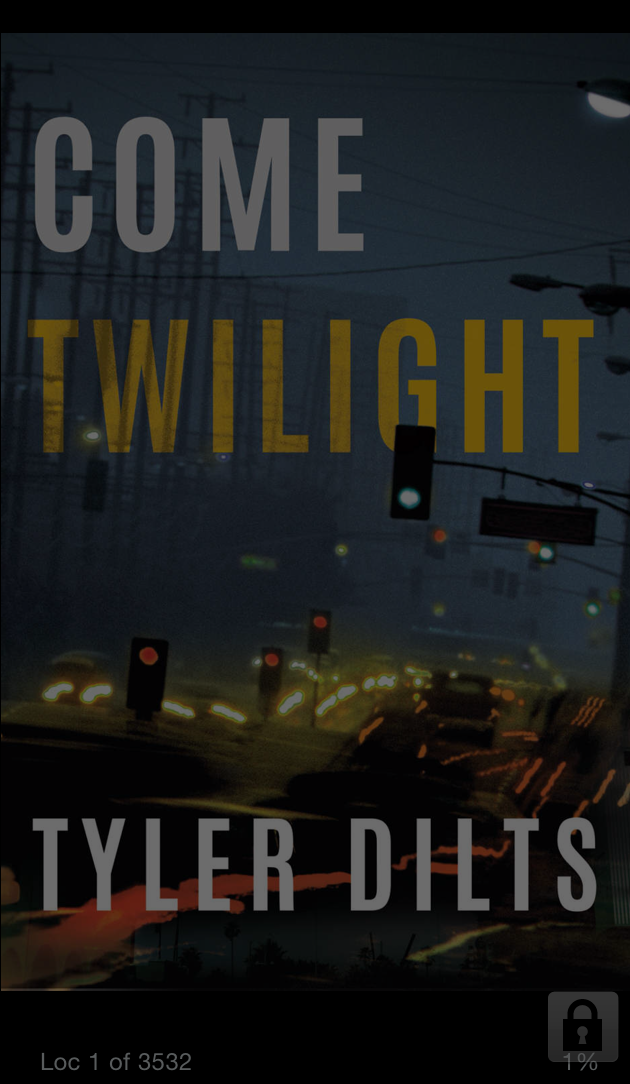
Come Twilight cover ebook Tyler DiltsJane Steele by Lyndsay Faye

I haven’t read all the nominated books this year, not even close, and I’ve reviewed even fewer — However, there are two especially I’d like to draw your attention to.

Come Twilight by Tyler Dilts is up for best paperback original (I read it as an ebook without harm).  You can read my full review of Come Twilight by Tyler Dilts, the latest installment in his contemporary mystery-thriller series featuring Long Beach, California police detective Danny Beckett. Sorry for the dark cover, but it’s a screenshot on my darkened phone while reading in bed. Yes, it’s that good.

Earlier this year, I also read, loved, and reviewed Jane Steele by Lyndsay Faye. If you haven’t already heard of this book, it’s a wonderful, edgy exploration of Jane Eyer’s story. You won’t be sorry you picked up this one, or frankly any other book by Lyndsay Faye. It also happens to have one of the most beautiful and interesting covers of the year as well.

Congrats to all the wonderful mystery writers on this list, and congratulations to us fans of mystery novels — we’re spoiled for choice!

About the Author: Benjamin L. Clark writes historical mysteries and works as a history museum curator.

WHY NOT SUBSCRIBE TO MY NEWSLETTER?

Book Review: Come Twilight by Tyler Dilts

Come Twilight cover ebook Tyler Dilts

WITH A BANG

Tyler Dilts’ latest installment in his current Long Beach Homicide series is fantastic.

Long Beach homicide detective Danny Beckett has had it rough, but things are starting to look up. That is until someone tries to kill him by blowing up his elderly Toyota Camry. The people around him, his fellow officers, his partner, and even his girlfriend do what they can to keep him safe from the mysterious people who have targeted him. And he hates it.

RECOMMENDED

I’m new to the series, which usually means I don’t get the ‘inside jokes’ and things, but it felt more like spending time with a group of great people, old friends, after hitting it off with a member of the group who is nice enough to include and accept you. I felt comfortable jumping in so late in the series and look forward to future books from Tyler Dilts.

I received a free ebook copy for review.

About the Author: Benjamin L. Clark writes historical mysteries and works as a history museum curator.

WHY NOT SUBSCRIBE TO MY NEWSLETTER?


MAYBE YOU LIKE THIS TOO?
Book Review: Six Bad Things by Charlie Huston
Noir Renaissance?


Like the post? Sign up for my newsletter!

← Back

Thank you for your response. ✨

Happy 100th Birthday Roald Dahl

roald-dahl-books-spines

henrysugar

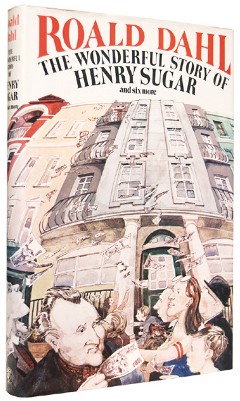
Where would we be without Roald Dahl’s books? Separate the man if you can and consider his work. This past week I read aloud to my partner Susan The Wonderful Story of Henry Sugar and other stories. It’s a fantastic collection of fiction and non-fiction. Some of it horrifying (I’m looking at you, bullies and the swan story!), but all of it perfectly RoaldDahlian. That perfect mix of weird and wonderful, macabre and marvelous.

Modern Moms and Dads sometimes say his stories are too dark. Too gross. Too profane, and are too mature for young readers. Bull. Shit. Dahl was brilliant (and yes grouchy), but I’d never tell a parent how to parent (now that I am one, I get it) however I will judge you silently. Everyone from Tim Burton to Stephen King and those who follow them, like Stranger Things’ Duffer Brothers, stand on Roald Dahl’s shoulders today.

What would I be without his strange sense of wonder, his fascination with life and death, and his sense of justice?  And acceptance? Like that of a grandmother and her grandson who has been turned into a mouse and will never be a boy again. Reading Dahl as an adult teaches me far more lessons than when I read him as a child. I think that’s the point.

We read The Witches in the last month or so waiting for the birth of our son last year. Reading aloud to one another each night and taking a few moments to talk to the baby yet to make his debut. Each chapter is a prayer to be able to love, to be brave, and stand up to wrong no matter the odds. It was perfect.

Why not subscribe to my newsletter?


roald-dahl